
How Do You Make the Right OEM Factory Choice for Elevators?
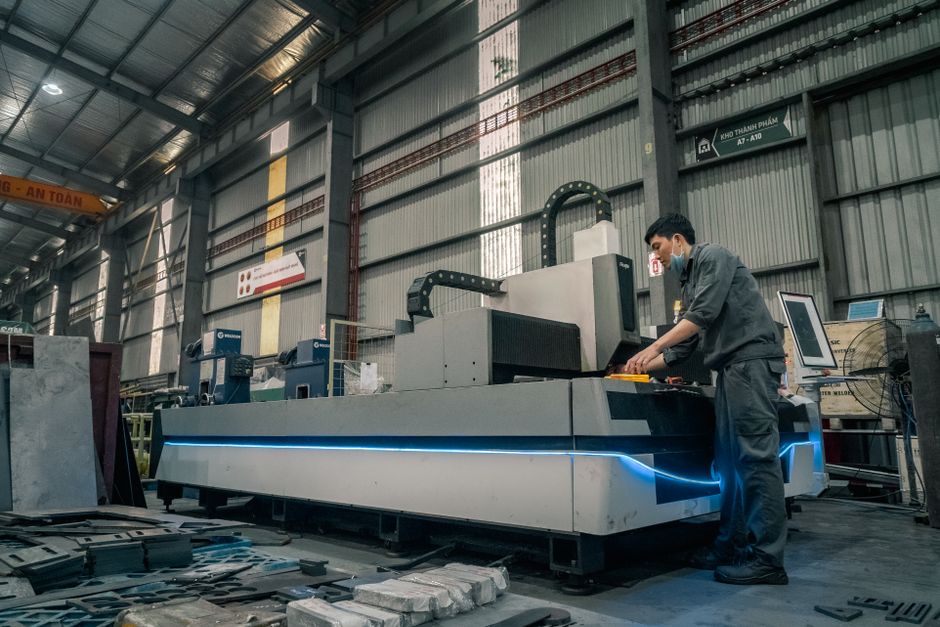
With the global elevator market valued at USD 84.8 billion in 2024 [2], selecting the right Original Equipment Manufacturer (OEM) is a high-stakes decision. Your choice impacts safety, long-term costs, and building functionality for decades. For over 18 years, XINFUJI has been a trusted OEM partner, delivering 12,000+ units annually from our Suzhou factory to over 60 countries. This guide provides the data-backed insights you need to make a smart, long-term investment in your vertical transportation partner.
The best OEM factory choice balances 5 key factors: Total Cost of Ownership (TCO), deep customization capabilities, international safety compliance (like CE/EAC), efficient lead times, and comprehensive after-sales support.
Why Your OEM Factory Choice is a 25-Year Decision
Choosing an elevator manufacturer is a long-term investment that impacts a building’s operational efficiency, safety, and budget for 15 to 25 years [8].
An elevator is not just a piece of equipment. It is the circulatory system of a building.
The initial purchase price is only one part of the equation. The total cost of ownership includes installation, energy consumption, maintenance, and eventual modernization.
A poor OEM choice can lead to frequent downtime, higher repair costs, and tenant dissatisfaction. These issues compound over the system’s multi-decade lifespan.
Conversely, a strategic partnership with a reliable OEM factory ensures safety, performance, and predictable costs. It is a decision that pays dividends for the life of the building.
Companies like XINFUJI focus on this long-term value, providing durable systems and global service to protect your investment.
Understanding 2025-2026 Elevator Market Pricing
The global elevator market is projected to reach USD 84.13 billion in 2025, with average unit costs expected to increase by 10-15% [1, 5].
Understanding current and future pricing is essential for accurate project budgeting. Several factors influence cost, including technology, materials, and regional demand.
The market’s growth is fueled by urbanization and the need to modernize aging infrastructure. Overhauls of systems older than 15 years represent a significant opportunity [9].
Factory-direct OEMs like XINFUJI help mitigate rising costs by eliminating intermediary markups, offering competitive pricing directly from the source.
Installation and Technology Costs
Installation costs vary significantly by elevator type and complexity. As technology advances, new features also add to the initial investment but can lower long-term operational costs.
For example, integrating IoT sensors for predictive maintenance adds an upfront cost of $1,500 – $3,000 per unit but can drastically reduce downtime and emergency repair fees [3].
| Elevator Type | Projected Installation Cost per Unit | Primary Use Case |
|---|---|---|
| Basic Hydraulic | $10,000 – $25,000 [3] | Low-rise buildings (2-4 stories) |
| Standard Hydraulic | $20,000 – $50,000 [10] | Low-to-mid-rise, freight applications |
| Machine Room-Less (MRL) | $25,000 – $60,000 [3] | Mid-rise residential & commercial |
| Traction (Geared/Gearless) | $30,000 – $80,000+ [3] | Mid-to-high-rise buildings |
| High-Speed Units | $25,000 – $600,000+ [6] | Skyscrapers and special applications |
These figures represent a baseline. Full customization, high-end cabin finishes, and advanced control systems can increase these costs.
Annual Maintenance Costs
Maintenance is a critical component of TCO. The maintenance segment is projected to dominate the market, reaching a size of USD 55.04 billion by 2026 [1].
Choosing an OEM with a robust and affordable maintenance plan is crucial. Newer technologies often have lower maintenance burdens.
| Elevator Type | Projected Annual Maintenance Cost per Unit | Key Factor |
|---|---|---|
| Pneumatic | $500 – $2,000 [3] | Fewer moving parts, simpler system |
| Machine Room-Less (MRL) | $1,000 – $3,500 [3] | Energy efficiency, modern components |
| Traction | $1,500 – $4,000 [3] | More complex systems, ropes/cables wear |
Key Elevator Industry Trends Shaping Your Investment
The elevator industry is rapidly adopting smart technology, with a focus on AI-enabled predictive maintenance, sustainability, and touchless interfaces [7].
Selecting an OEM factory requires looking beyond current specs to future-proof your building. The right partner is one that embraces innovation.
Smart Elevators & IoT Integration
Modern elevators are becoming data hubs. IoT sensors collect real-time data on performance, usage, and component health [7].
This allows for remote monitoring and predictive maintenance, where AI algorithms analyze data to forecast potential failures before they happen. This shift from reactive to proactive service minimizes downtime.
Sustainability and Energy Efficiency
Energy efficiency is no longer a luxury. It’s a core design requirement. MRL elevators, which are a specialty of XINFUJI, are gaining popularity for their reduced energy use and smaller footprint [1].
Other green technologies include regenerative drives that capture braking energy, standby modes, and efficient LED lighting. These features reduce a building’s operational costs and carbon footprint.
Touchless and Health-Focused Features
The global health crisis accelerated the adoption of hygienic solutions. Touchless call systems, operated via mobile apps, gestures, or voice commands, are becoming standard [7].
These features enhance user convenience and safety, making them a key consideration for residential, commercial, and especially hospital elevators.
Customization and Experience
Elevators are now part of the architectural experience. There is a growing demand for customization in cabin finishes, lighting, and control interfaces [7].
An OEM with strong, flexible production capabilities, like XINFUJI, can deliver bespoke solutions that align with a building’s unique design aesthetic, from luxury home elevators to stunning glass observation elevators.
Comparing OEM Factory Models: Global Giants vs. Direct-Factory Partners
Your choice of OEM partner model—a global conglomerate or a direct-factory manufacturer—dramatically affects price, flexibility, and service [4].
The elevator market includes massive multinational corporations and agile, specialized factories. Understanding the differences is key to finding the right fit for your project.
Global brands like Otis, KONE, and Schindler offer vast service networks but often come with higher prices, proprietary parts, and less customization flexibility.
Direct-factory partners like XINFUJI offer a different value proposition: direct communication, greater customization, and competitive factory-direct pricing by eliminating layers of distribution.
| Factor | Global Conglomerate (e.g., Otis, KONE) | Direct-Factory OEM (e.g., XINFUJI) |
|---|---|---|
| Pricing | Higher, includes brand premium and multiple distribution layers. | Highly competitive factory-direct pricing. |
| Customization | Often limited to pre-set packages and models. | Fully customizable cabin size, materials, controls, and features. |
| Communication | Multiple layers of sales, regional offices, and corporate contacts. | Direct communication with the factory’s engineering and export teams. |
| Lead Time | Can be longer due to complex global supply chains. | Often faster and more flexible due to agile production lines. |
| Parts & Service | Often use proprietary parts, locking customers into their service network. | Uses industry-standard components, offering more service flexibility. |
Keep Reading Related elevator insights |


